Design Thinking in the Age of Artificial Intelligence
In today's dynamic technology market, creating innovative products that solve real user problems is a company's greatest competitive differentiator. This is where Design Thinking stands out as one of the most powerful human-centered approaches to innovation. However, the discovery and validation process traditionally requires exhaustive meetings and manual data compilation. Today's major turning point is the integration of Artificial Intelligence (AI) into this process. AI does not replace human empathy, but acts as an idea booster, processing complex data, suggesting hidden patterns, and surprisingly accelerating prototyping.
What is Design Thinking and What Are Its Stages?
Design Thinking is a problem-solving approach focused on the needs of the end user. It is structured into five fundamental stages:
Tools for Conducting Discovery Ceremonies
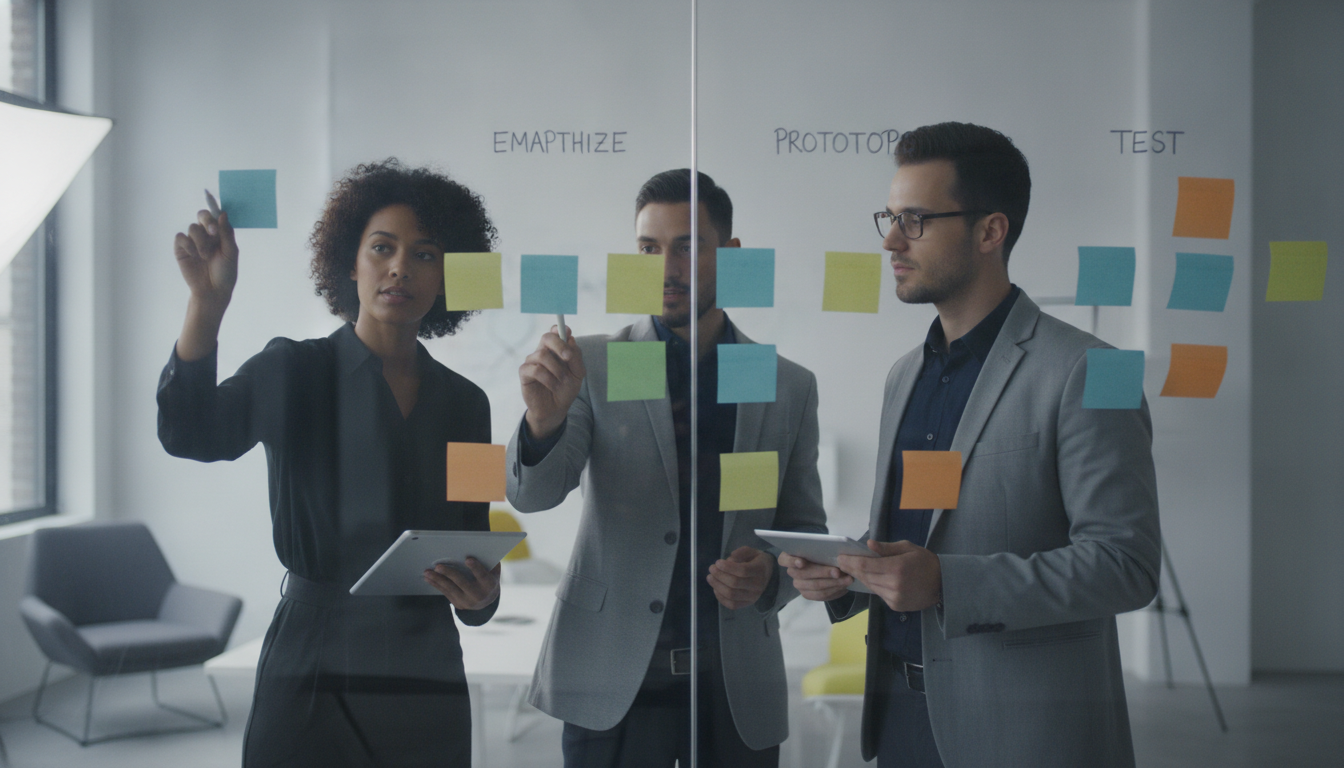
To enable discovery ceremonies remotely or in a hybrid format, the market traditionally uses online visual collaboration tools. Systems like Miro, Mural, and FigJam (Figma) are preferred by agile teams to centralize sticky notes, CSD matrices, and user journeys. However, filling out these tools manually can take up precious time that the team should be spending on strategic discussions. It is in this gap that modern systems are integrating AI assistants to automate repetitive tasks.
With intelligent automation, discovery ceremonies become more dynamic. AI features help quickly summarize large volumes of sticky notes, group similar ideas into logical clusters in seconds, and structure the workshop workflow without requiring the facilitator to build everything from scratch.
Design Thinking versus Design Sprint
Although they share an unwavering focus on user experience, Design Thinking and Design Sprint are not the same thing:
In summary, you can use Design Thinking in your daily corporate routine to nurture a continuous innovation ecosystem, while the Design Sprint is the ideal tool to accelerate a specific project under tight time constraints.
How Does Design Thinking Connect to Lean Inception?
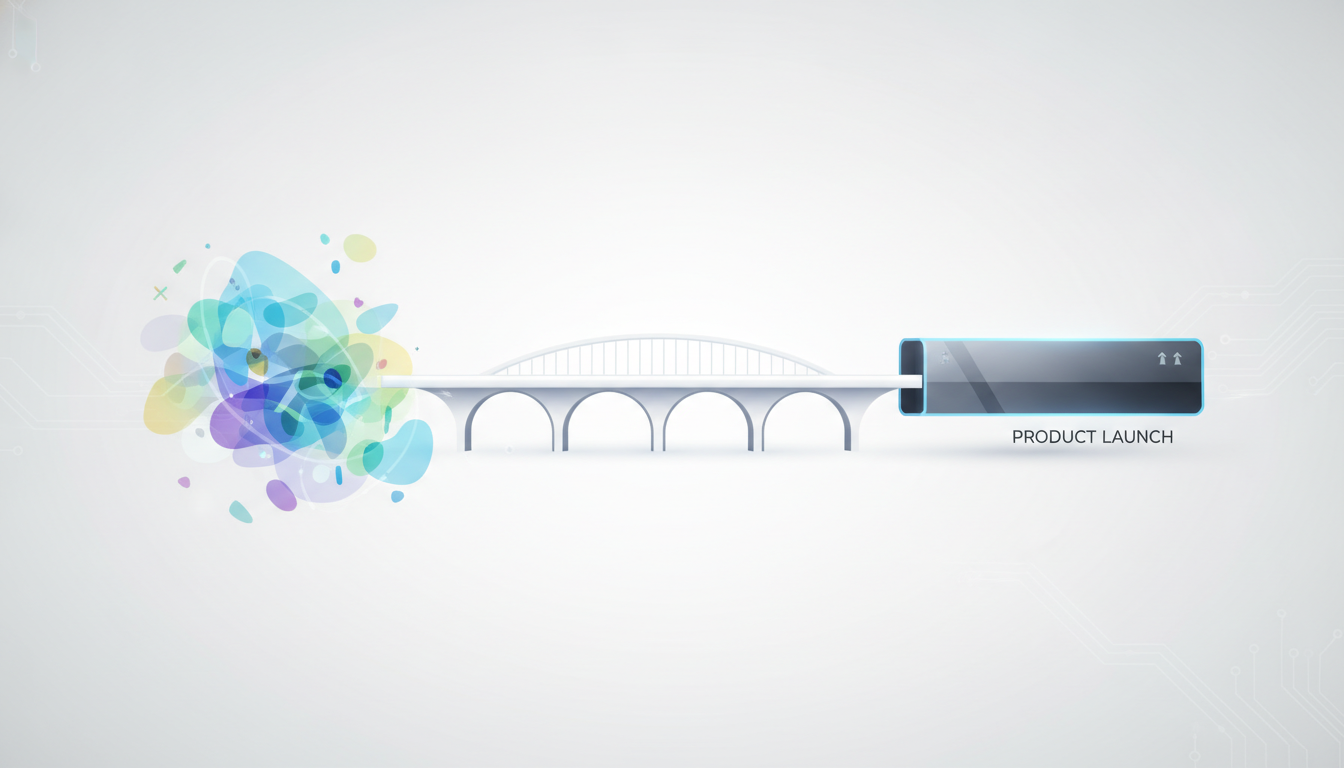
After the problem and pain discovery phase of Design Thinking, teams face the challenge of defining the first real version of the digital product. This is where Design Thinking connects directly with Lean Inception.
Lean Inception is a renowned method, created by Paulo Caroli, focused on aligning business, user experience (UX), and technology stakeholders to define the Minimum Viable Product (MVP). While Design Thinking gives us clarity on the ideal problem to be solved, Lean Inception provides the lean tactical plan to build and validate this solution with the least effort possible.
From Lean Inception to Product Backlog Building (PBB)
Many teams struggle to transform the MVP Canvas defined in Lean Inception into actionable items for the development team. Product Backlog Building (PBB) addresses precisely this communication gap.
PBB is a collaborative facilitation technique that uses the outputs generated in Lean Inception (such as personas, journeys, and priority MVP features) to break down these solutions into a high-fidelity product backlog. PBB works by structuring the backlog step-by-step, identifying problems, benefits, features, and ultimately generating backlog items (PBIs) and User Stories.
What Is the Difference Between PBB and User Story Mapping?
Although both frameworks facilitate visual backlog organization, their approaches and work structures are distinct:
Our Design Thinking Module: The Power of a Single Flow with AI
Historically, product teams had to migrate data between different systems: Miro for Design Thinking, isolated digital boards for Lean Inception, and Jira or Azure DevOps for the backlog. This process created fragmentation and a loss of product history.
Our platform's Design Thinking module eliminates this inefficiency by natively integrating all stages: Design Thinking, Lean Inception, and Product Backlog Building into an integrated digital ecosystem. But the real game-changer is our integrated Artificial Intelligence engine:
Boost Your Product Team's Performance Today
The era of manual and decentralized discovery is behind us. The future belongs to teams that combine the empathetic depth of Design Thinking with the analytical speed of Artificial Intelligence. Centralizing Design Thinking, Lean Inception, and PBB in a single, AI-powered platform ensures scope clarity, eliminates information silos, and drastically reduces your MVP's time-to-market.
Want to see AI transform discovery and backlog structuring in your company in practice? Visit our platform right now, start a free trial, and take your team's performance to the next level!
Frequently Asked Questions (FAQ)
1. How does Artificial Intelligence enhance the Design Thinking process?
Artificial Intelligence accelerates empathy building, ideation, and prototyping by processing vast user research datasets and generating initial concepts in minutes. It acts as an augmented co-creator that helps facilitators identify hidden user patterns and iterate solutions rapidly. This significantly reduces time-to-insight while keeping the core process human-centric.
2. Can AI be integrated into Lean Inception and Product Backlog Building (PBB)?
Yes, AI streamlines Lean Inception by rapidly synthesizing product goals, personas, and feature journeys during collaborative alignment sessions. In Product Backlog Building (PBB), generative AI helps structure user stories, acceptance criteria, and business outcomes with consistent precision. This ensures a seamless transition from strategic discovery to agile execution.
3. Does using AI in Design Thinking replace human empathy and creativity?
No, AI is designed to augment human capability rather than replace empathy and intuition in the innovation lifecycle. While AI handles data synthesis, pattern analysis, and rapid draft generation, human facilitators provide contextual judgment, ethical boundary-setting, and genuine empathy. The hybrid approach combines data-driven scale with human relevance.
4. What are the best AI tools to apply during Design Thinking workshops?
Large language models like ChatGPT, Claude, and Gemini excel at synthesizing qualitative user feedback, drafting personas, and generating alternative problem statements. Additionally, visual AI tools and digital whiteboard assistants in Miro or Figma Help teams automatically cluster sticky notes and visualize concept prototypes in real time.
5. How do I merge Design Thinking, Lean Inception, PBB, and AI into a continuous workflow?
You build a continuous pipeline where AI acts as the connective layer across empathy mapping in Design Thinking, vision alignment in Lean Inception, and story mapping in PBB. AI automates documentation handoffs and maintains context transfer between each transition phase. This eliminates silos and creates a fast feedback loop from initial problem discovery to continuous product delivery.